About
Thirty years in corporate finance, treasury and equipment leasing — sixteen of them in corporate treasury, most recently as Treasury Director for the US and Canada at a combined $8 billion CPG business.
Before treasury, financial reporting and analysis, corporate strategy and M&A, and investor relations. All of it inside Fortune 500 and Fortune Global 500 companies in consumer packaged goods, building and construction materials, and industrial equipment manufacturing.
I started Fractional Transformation to put that experience to work for companies that have the same opportunity sitting in their equipment fleet, and nobody assigned to find it.

Filling that gap is the whole of the practice.
Most of the time that means holding the lease portfolio and running it — the record of what exists, the calendar of what is due, the end-of-term decisions taken before the window closes, and someone other than you accountable for all three. It needs no project in front of it. It starts on the contracts you already hold, whoever you signed them with, and that is where most engagements begin.
The transformation work is the second conversation, and it is where the structural savings sit. I have run that at national scale: the fleet baseline, the competitive event across equipment, service and lease financing together, the implementation site by site, and the administration that keeps it from unwinding afterward. It is structured to reach $3.5 million in annual savings at full run rate.
There is a version of this work where the adviser arrives knowing roughly as much as you do, learns the subject on your budget, and leans on your internal team to do the parts that turn out to be hard. It is common enough in consulting that most buyers have been through it at least once.
I have built and run centralized equipment lease administration twice, twenty years apart. The transformation described in the case study is the second program. The first was nearly twenty years ago at a $2.5 billion construction materials producer — where I managed a portfolio of 6,808 leased assets across 707 schedules and $620 million of original equipment cost, and took the spread from 128 basis points over benchmark to 14.
That first program is still running. I built the role, trained the person who took it over, and left. Twenty years and several people later, there is still someone in that treasury team responsible for the equipment lease portfolio. The role outlasted everyone who has held it, which is the point — a program that depends on one person is not a program.
So there is no learning curve to fund, and no discovery phase where I work out what the questions are. I already know where the money is in an equipment fleet, what a lessor will and won't concede, and which parts of an implementation quietly fail if nobody is watching them.
Equipment lease financing carries enough financial structure that it does not sit naturally in Procurement, and enough operational detail that it does not sit naturally in Finance. Very few people have sat on both sides of it. I have.
I also finish what I start. At my most recent employer, three long-standing corporate treasury initiatives had all been previously attempted for the US and Canada operations without success. I completed all three within five years of taking the post, alongside the inaugural treasury management system implementation for the US and Canada.
The equipment lease program came about differently. In my first interview there, I told the manager who went on to hire me that the company probably had a large opportunity sitting in its equipment lease portfolio, whether anyone had looked at it or not. He was frankly incredulous. Six years later, when the timing was finally right, I started the work — and two years after that it was on its way to delivering approximately $3.5 million a year.
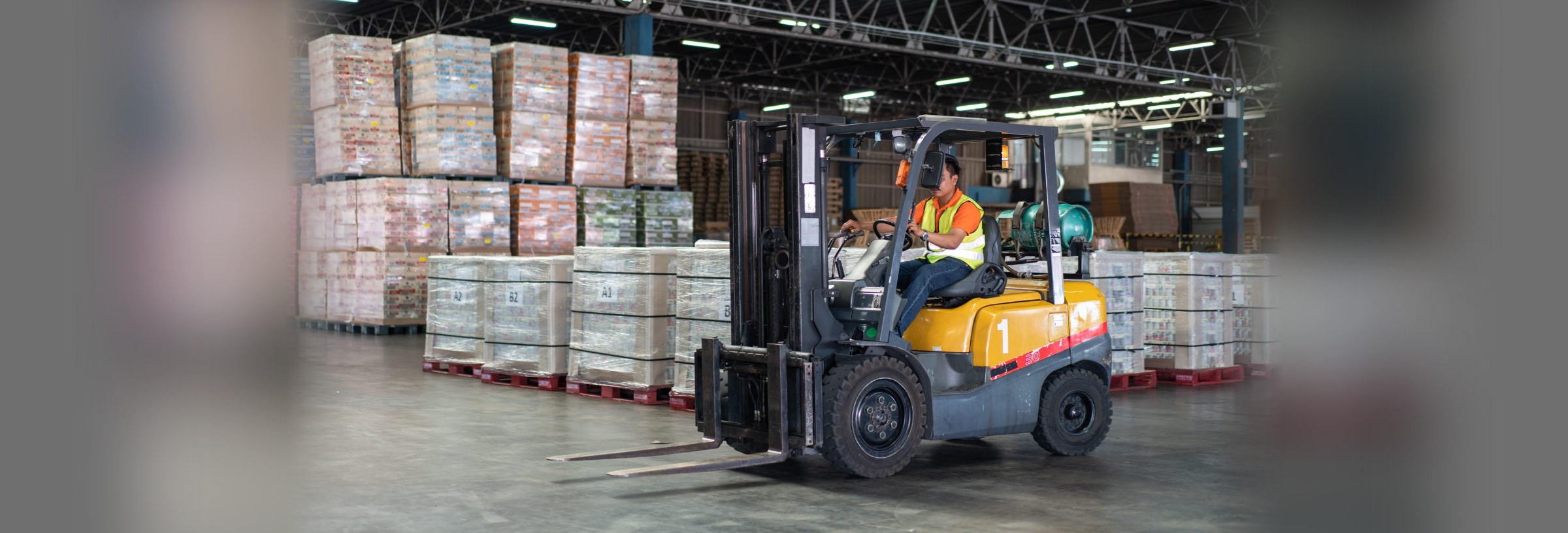
Administration covers the commonly leased asset classes — materials handling, construction and aggregates, and over-the-road tractors and trailers. Transformation is deepest in materials handling and facility sanitation, where the method was built. The underlying experience is broader, and covers the lease structures that go with each class:
If your exposure sits in one of the other classes, it is worth a conversation.
Based in Phoenix, Arizona. Clients served nationally, on site or remotely as the work requires.
That is the usual starting point. A first conversation is 30 minutes and there is no charge. If there is nothing here for you, I will say so.