
Case study
Materials Handling and Sanitation Equipment Leasing Transformation
Fleet and Lease Cost Transformation at a Multibillion-Dollar CPG Manufacturer
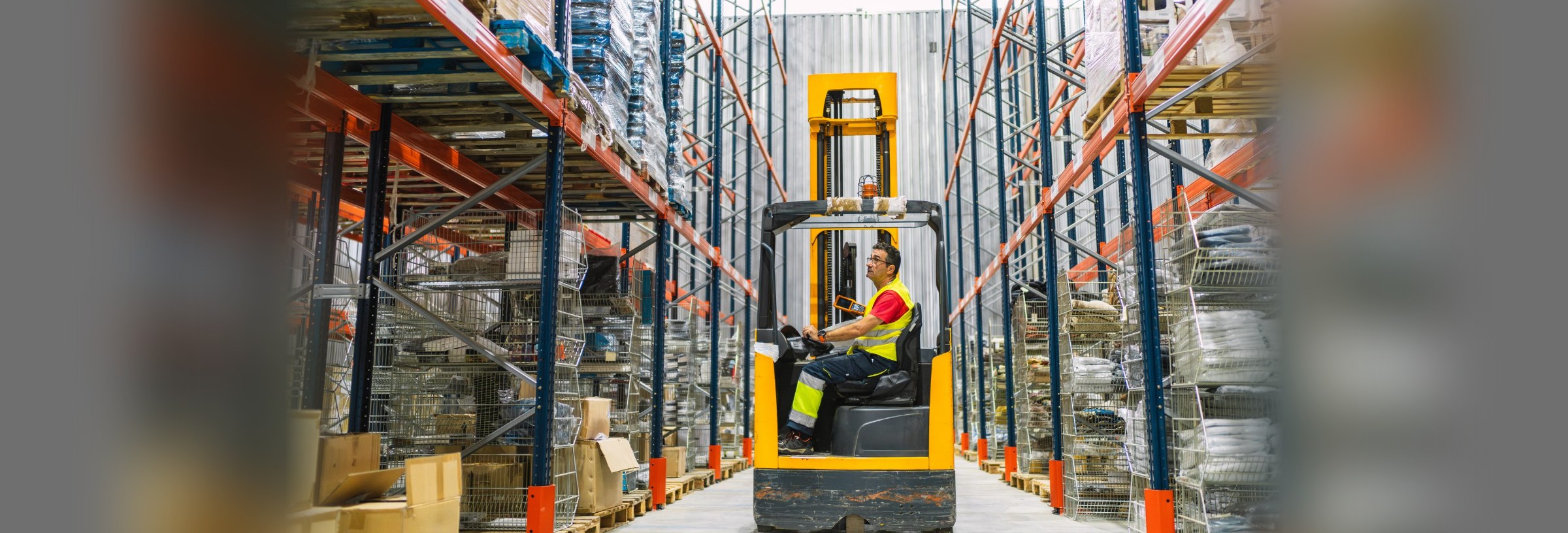
At a multibillion-dollar CPG manufacturer, I led a national redesign of the materials handling and facility sanitation equipment program. The work brought equipment pricing, maintenance, lease financing, lifecycle decisions and administration under one structure. Savings began with rental conversions and are building toward approximately $3.5 million per year at full run rate as legacy leases complete their five-year replacement cycle.
I led the program in-house as Treasury Director. An external consultant brought structure to the RFP process; the strategy was mine. At its core: equipment, service and lease financing bid as one package, and every site's volume bid at once — economies of scale and scope in a single event. Around that — the fleet baseline it was bid from, the lease-only lifecycle and the structure behind it (higher residuals, a five-year or 10,000-hour return limit), the internal alignment that made standardized bidding possible, and the Master Lease Agreement memorializing the negotiation.
Delivered as an employee, not through Fractional Transformation LLC.
Business challenge
Production facilities and distribution centers spread over more than 150 sites had traditionally acquired equipment locally through purchases, rentals and leases. Sites negotiated equipment, maintenance and financing separately, which limited national buying power and left the company paying different prices and service rates for similar assets.
Asset specifications and service practices were inconsistent, approval paths were complex and often circumvented, and lease information did not always reach Accounting for complete reporting under the applicable lease-accounting standards. Expiration dates, returns and replacements were not managed through one process, and late payment fees exceeded $15,000 per year.
My first deliverable was not a negotiation; it was an inventory. The fixed-asset register served accounting, not fleet management, and needed significant cleanup before it could show the types, quantities, ownership status and age of equipment in use.
That baseline was also what the RFP was bid from: it gave competing providers enough context to understand the equipment mix and the size of the opportunity. It required a judgment about what to count — nearly a quarter of the register's line items were batteries, chargers, clamps and other attachments rather than machines, replaced on a shorter cycle. Counting only primary machines, the pattern was symmetrical and stark — 86% of owned units were more than five years old, while 86% of leased units were five years old or newer. That pointed clearly to pent-up demand for a fleet refresh.
Program design
I structured the program so the selected provider could capture value from the equipment sale, maintenance and ongoing service, lease financing, and the return of well-maintained equipment to its rental fleet. That broader opportunity is what let the provider price more aggressively.
The program was also deliberately lease-only, and the fleet baseline made that case on its own. Same company, same sites, same work — the acquisition method was the only variable, and it was setting the age of the fleet. Owned equipment stays until somebody decides to retire it, and a thirteen-year depreciation policy at this company made that decision even less likely. Standardizing on the lesser of five years or 10,000 operating hours put a return date on every machine, and it is what made the residual structure possible: a provider underwrites a serious residual only on equipment it maintains and expects to get back.
The RFP set the national commercial framework, but a contract that isn't implemented is just paper. I built an operating model around it so each site could request, approve, order, operate and replace equipment through one process.
Equipment acquisition
Rather than bid equipment line by line, I used the fleet baseline to build a market basket of the specifications and configurations that actually recurred across the enterprise, and had providers price that basket. A common basket made competing bids directly comparable; consolidating the volume under one provider is what produced the price. Contracted prices landed approximately 40% below MSRP, against a starting point where every site had negotiated its own discount.
Maintenance and service
National rates were established on the same basis for both preventive-maintenance and full-service plans, at approximately 40% below published rates. Rate was one decision; the other was when to use each plan. Every leased unit was required to carry a plan. Full service was directed only to units expected to exceed 2,000 operating hours per year, where its fixed monthly cost is spread across enough usage to earn it. Below that threshold the program used a preventive-maintenance plan at roughly a third of the price and retained repair risk in-house — a sound trade on equipment returned before its repair curve turns.
Lease financing
As part of the holistic value strategy, every leased unit included provider-performed maintenance, which gave the provider greater confidence in the equipment's end-of-term condition. As a result, the winning bid incorporated residual values of 35% to 50%. Those higher residual assumptions directly benefited the company through lower lease-rate factors and monthly payments.
Lifecycle controls, administration and end of term
A new lease-request process was implemented to cover site assessment, specification approval, ordering and delivery, while a common fleet record and end-of-term calendar centralized expiration tracking, returns and replacement decisions. That record also closed a compliance gap. A site could sign a lease and nobody outside it would know: the payments turned up in lease expense on the general ledger, but Accounting was never told the lease existed, so it could not be recognized or accrued correctly. One record of every lease — term, payments and expiration — fixed that, and gave FP&A something better than last year's number to budget from. I also negotiated an unusual arrangement with the mandated provider under which credits would be provided at the end of a lease term when actual usage fell below contracted hours. Automated invoice reconciliation and centralized, on-time payment eliminated recurring late fees.
Results and realization
The program is structured to reach approximately $3.5 million in annual savings at full run rate, at around sixty months, once the last pre-existing lease agreements have expired and the long-dated owned equipment has transitioned. That timing reflects the legacy lease schedule rather than the pace of implementation — the structure is in place, and the remainder is a question of time. Savings began immediately and accumulate in three parts.
Where the $3.5 million a year comes from
Three components of the same program, and what each one waits on.
Scroll sideways to see all three components.
The demand signal in the fleet baseline proved accurate: within the first year after the RFP, the company placed orders representing more than 20% of its original fleet size. What had been missing was a consistent process and pricing strong enough for sites to act.
The realization curve also showed why administration mattered: the negotiated economics hold only if somebody tracks expirations, enforces the request process, reconciles invoices and makes replacement decisions before sites drift back to rentals or local agreements.
Value not included
No value was assigned to improvements in reliability, uptime, safety or equipment condition — for example, the transition from older rental equipment to new leased equipment. Nor was any value assigned to maintenance and service savings: before the program, plans were the exception rather than the rule, and ad hoc repairs were spread across 30 to 50 local providers and booked inconsistently from site to site, so no defensible historical baseline existed. The negotiated rates ran approximately 40% below published pricing, but the savings calculation counts none of it. The reported savings reflect equipment, financing and rental conversion economics only.
Five questions for your own fleet
The age gap. How does the average age of your owned units compare with your leased ones?
A persistent gap means the acquisition method, not the maintenance program, is setting your cost curve, and that owned units are being held well past the point at which they were the cheaper option.
The rental tail. How many units are on long-term rental, and how long have they been there?
Anything past twelve months is being paid for at something like three to six times the cost of a comparable lease. It usually got there for two reasons: the site needed the machine quickly, and renting was the only route that didn't need a capital approval.
The residual you are already paying for. Do you know the residual assumptions embedded in your current lease-rate factors, and does actual usage support them?
The lower the residual, the more of the machine's price you pay off during the term. A lessor that doesn't maintain your equipment has less visibility into the condition it will come back in, and no control over it, so it assumes the worst — and you pay that assumption every month.
Scope, not just scale. Are equipment price, service rate, lease financing and end-of-term conditions negotiated with the same counterparty, at the same time, in one competitive event?
Consolidated volume earns a better price. Consolidated scope is what lets one layer pay for another.
The reversion test. If the person who last negotiated your equipment agreements left tomorrow, what would stop the program drifting back to local practice within a year?
If these answers are difficult to obtain, a focused diagnostic can establish the fleet baseline, identify the largest cost gaps and determine whether a full transformation would produce a worthwhile return.